
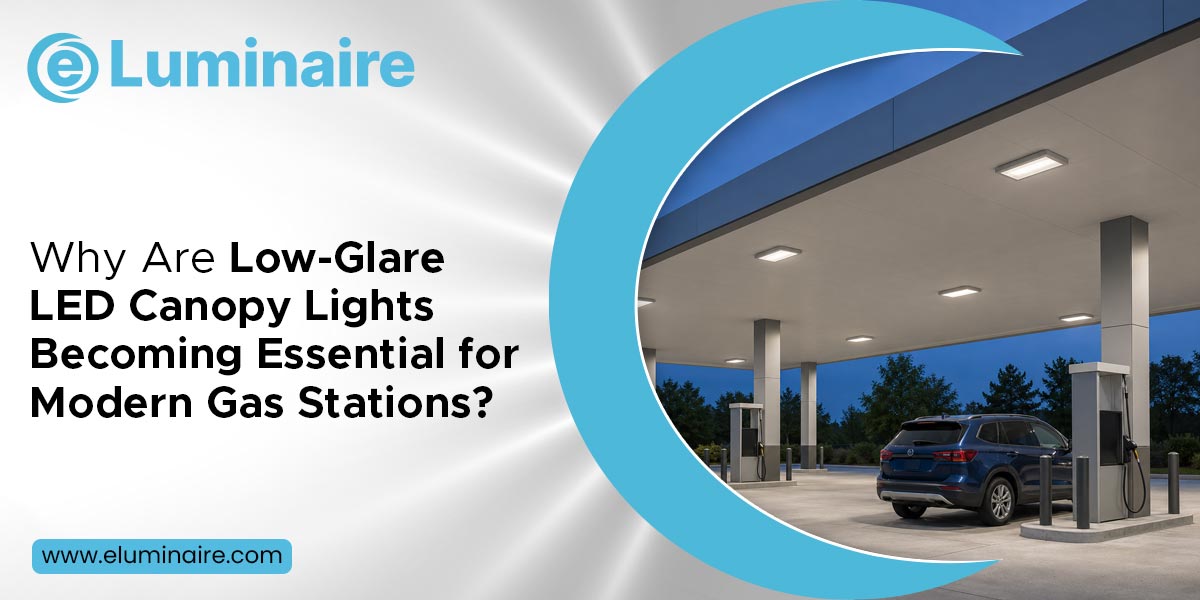
We’ve all pulled into a gas station after dark and squinted before finding an open pump. The canopy looks bright, yet the payment screen feels surprisingly difficult to read. That’s the problem we want to solve. eLuminaire offers energy efficient commercial lighting for gas stations in Nashville, TN, and we believe comfortable visibility deserves as much attention as electricity savings. When you’re managing a busy station, you need lighting that makes everyday tasks easier without making your forecourt feel harsh.
Because brighter isn’t always better.
When we talk about low-glare canopy lighting, we mean controlling how light reaches your eyes while keeping useful illumination on the fueling area. We’re looking for clear visibility without the distracting intensity of exposed, overly bright light sources.
Glare can cause discomfort. In some situations, it can also make details harder to distinguish, especially when we move between a dark road and a brightly illuminated canopy. Simply choosing LED technology doesn’t prevent this problem.
We need to consider fixture optics, mounting height, spacing, and viewing angles together. A thoughtfully designed lens or shield can help direct light toward the intended area. But even a good fixture needs the right placement.
We wouldn’t judge a pair of glasses by how shiny the lenses look. We shouldn’t judge a canopy by brightness alone, either.
Picture a rainy November evening in Nashville. You’re stepping around a puddle, checking the pump number, and reaching for your card. We want the lighting to support those ordinary movements, without adding a sharp reflection across the payment screen.
That’s a practical reason to reduce glare.
eLuminaire manufactures canopy lighting, and we approach fixture selection around the activities beneath the canopy. We want you to see the hose, read instructions, and recognize changes in the walking surface without constantly adjusting your gaze.
We also need to think beyond the pump. With our parking lot LED lights in Nashville, TN, we consider how illumination around parking spaces connects with the fueling area. A comfortable canopy can still feel disconnected if your route to the store crosses a poorly lit patch.
And visibility matters throughout that short walk.
When a station feels difficult to see around, increasing wattage can seem like the obvious answer. We understand the instinct. Nobody wants a dim forecourt.
But a brighter fixture can intensify glare while leaving the original layout problem untouched. We might still have shadows behind equipment, uneven coverage between pumps, or distracting brightness near the driveway.
Through our industrial LED lighting for infrastructure projects in Nashville, TN, we bring the same task-focused thinking to larger sites: we start with what needs to be visible, then consider how to illuminate that area.
For your gas station, we recommend reviewing:
We can use a photometric plan, a calculated lighting layout, to evaluate these conditions before installation. That’s more useful than guessing from a product photo.
Yes, with suitable equipment and a considered layout. However, we shouldn’t confuse low glare with low wattage. We can have an efficient fixture that still feels uncomfortable when positioned badly.
eLuminaire offers energy efficient commercial lighting for gas stations in Nashville, TN, and we encourage you to compare total system power alongside the illumination your site actually needs.
Here’s a simple hypothetical example. If we replace twelve fixtures drawing 150 watts each with twelve suitable 70-watt fixtures, we reduce connected load by 960 watts. At twelve operating hours daily, that’s approximately 4,205 kilowatt-hours annually.
That calculation isn’t a performance promise. We still need to confirm equivalent useful illumination, actual input power, operating schedules, and your electricity rate before estimating savings.
Compatible controls may offer additional savings. We can consider daylight switching or scheduled dimming where operating needs allow, while maintaining the lighting required for active fueling and pedestrian movement.
We know how easily a lighting comparison can turn into a spreadsheet full of watts and prices. Those numbers matter. So do installation details that become expensive when overlooked.
eLuminaire offers canopy options that include recessed configurations and several color temperatures. We recommend checking the specific model and configuration against your canopy structure, electrical supply, and lighting plan.
For projects across the United States and Canada, we also recommend confirming local installation requirements with your qualified electrical professional. We shouldn’t assume that a product configuration suitable for one location automatically fits another.
Our warehouse LED lighting in Nashville, TN follows this same application-first approach. We match equipment to the environment rather than treating every overhead lighting task as identical.
Your business needs to remain visible after sunset. We don’t need excessive spill into nearby windows to achieve that.
We favor directing light toward the intended area, avoiding unnecessary output, and using controls appropriately. These principles support a more comfortable relationship between your station and the surrounding neighborhood.
eLuminaire supplies parking lot LED lights in Nashville, TN, and we encourage you to review canopy and perimeter lighting together. Adjusting one area without assessing the other can leave an uneven result.
Color temperature deserves attention, too. We shouldn’t automatically choose the coolest available white because it appears brighter. We need to balance visibility, visual comfort, local requirements, and the character of the surrounding area.
A lower color temperature alone won’t fix glare. Optics and placement still matter.
Often, yes. We start by reviewing mounting openings, canopy condition, wiring, and the existing fixture arrangement. We also check whether replacement equipment requires adapters or changes to the installation.
For our industrial LED lighting for infrastructure projects in Nashville, TN, we take those existing conditions seriously. We recommend the same care for a gas station retrofit, where installation access and keeping pumps available can affect scheduling.
eLuminaire offers warehouse LED lighting in Nashville, TN, alongside canopy solutions, and we welcome a discussion about your existing equipment before recommending replacements.
Send us your canopy dimensions, mounting height, fixture count, and a few nighttime photos. We can start with what’s bothering you, whether that’s harsh brightness, uneven coverage, or an electricity bill that keeps climbing. You don’t need every technical answer ready.