
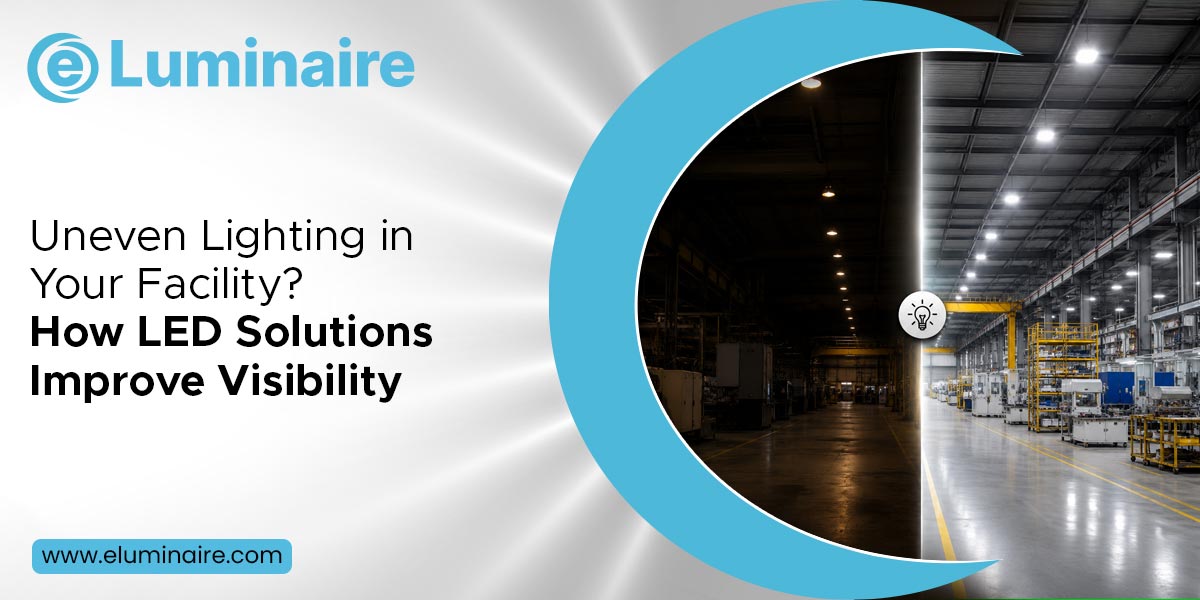
Maybe you’ve walked across your facility and noticed bright areas beside dim, shadowy spaces. Your staff may struggle to read labels, inspect products, or move safely between work zones. A trusted Commercial LED Lighting Supplier in New York can help uncover why these problems keep returning. At eLuminaire, we understand how tiring poor visibility can become during a long workday.
Uneven light usually starts with something small. One fixture loses brightness, shelving blocks the light, or a workspace changes purpose. At first, it doesn’t seem serious. Over time, workers may experience eye strain, headaches, missed details, or growing discomfort. We’ve seen this happen often, especially in spaces that have expanded without a fresh lighting plan.
A facility rarely stays the same for years. We move equipment, add storage racks, create workstations, and change how each area is used. Yet the lighting often remains in its old place. When our fixtures no longer match our layout, dark spots and harsh patches begin to appear.
An experienced Commercial LED Lighting Manufacturer in New York can study how every fixture spreads light across floors, shelves, machines, and work surfaces. At eLuminaire, we look beyond fixture counts. We consider ceiling height, wall colors, natural daylight, task needs, and the shape of each room.
Older lamps can also lose brightness at different rates. One lamp may still look acceptable, while another becomes weak or starts flickering. This mixed output creates an uneven view across the facility. Our eyes keep adjusting between bright and dark areas, which can make normal work feel harder.
A dependable Commercial LED Lighting Distributor in New York can help replace mismatched products with fixtures that provide steady output. This matters when a facility has gathered several lamp types over many years. A planned upgrade brings those different areas back into balance.
Many people tell us that dim areas simply feel uncomfortable. It can be difficult to explain at first. Workers may lean closer to labels, pause before stepping into an aisle, or avoid certain work areas. These small actions can slow the day and make routine tasks feel stressful.
Poor light can also affect confidence. When we cannot clearly see a surface, package, control panel, or walkway, we naturally become more careful. That caution has value, but it shouldn’t come from lighting that fails to support the work. Good visibility helps us move with greater ease.
At eLuminaire, we often find that discomfort comes from more than low light. Excess glare, sharp shadows, flicker, and poor color quality can cause similar problems. A bright facility isn’t always a well-lit facility. The light must reach the right places without creating new strain.
Every area has a different purpose. A loading dock doesn’t need the same lighting plan as an inspection bench. A warehouse aisle, office, parking garage, and production floor each need a suitable beam shape, light level, and fixture position.
A skilled Commercial LED Lighting Supplier in New York can help match each fixture to the work below it. We may use focused light for detailed tasks and wider light for open areas. This approach gives each space what it needs instead of applying one fixture everywhere.
These questions bring real work needs into the plan. At eLuminaire, we value what workers notice during daily use. A lighting plan becomes more useful when it reflects actual tasks, common concerns, and the way people move through the space.
LED fixtures give us better control over light direction. We can choose optics that spread light broadly, guide it down narrow aisles, or place it across wide production floors. This control helps reduce dark pockets without flooding nearby areas with harsh brightness.
Working with a Commercial LED Lighting Manufacturer in New York also gives us more control over fixture design, output, size, and mounting needs. A well-matched fixture can send useful light where it belongs. This reduces wasted light on ceilings, walls, or empty spaces.
Color quality also changes what we can see. Clear, balanced light can make labels, wires, surface marks, and product colors easier to identify. This is useful in assembly, quality checks, packing, retail, food service, healthcare, and many other work settings.
At eLuminaire, we design LED fixtures with precision and long-term use in mind. We want each space to feel clear and comfortable, not cold or overly bright. The right result should support focus without making workers feel exposed under harsh light.
Lighting cannot replace safe work rules, training, or proper signs. Still, clear visibility supports all these steps. Workers need to see floor changes, equipment edges, moving vehicles, spills, stairs, and warning marks before reacting safely.
A knowledgeable Commercial LED Lighting Distributor in New York can help identify fixture options for wet areas, dusty spaces, cold rooms, outdoor zones, or high ceilings. Each setting brings different needs. Choosing the correct fixture protects light quality and helps avoid early product failure.
Emergency routes also deserve close attention. Exit paths, stairwells, and access points should remain easy to recognize. Uneven light near these areas can create confusion, especially during a power issue or urgent event. We should review these zones during every lighting update.
Most people don’t connect lighting with how drained workers can feel after a shift. Yet constant glare or repeated changes in brightness can demand extra effort from our eyes. That strain may show up as tiredness, poor focus, or a strong urge to leave a certain area.
A reliable Commercial LED Lighting Supplier in New York can help improve comfort through better fixture placement, glare control, and suitable light levels. We do not need maximum brightness everywhere. We need calm, even light that suits the task and supports the people doing it.
At eLuminaire, we believe a facility should feel easier to work in after an upgrade. Workers should not need to squint, shift position, or block glare with a hand. Small improvements in comfort can change how a full day feels.
Facility owners often worry that better visibility must mean higher energy use. LED lighting can improve coverage while using less power than many older systems. The key is choosing efficient fixtures and placing each one with care.
A capable Commercial LED Lighting Manufacturer in New York can help balance output, fixture count, controls, and energy goals. We can use dimming, occupancy sensors, or daylight controls where suitable. These tools reduce waste without leaving active work areas underlit.
We should also think about upkeep. Older lamps may require frequent replacement, especially in hard-to-reach areas. LED fixtures can reduce maintenance visits and help light levels stay more consistent across the facility. That means fewer sudden dark spots and less disruption.
A good design needs the right products at the right time. Delays, mixed models, or last-minute replacements can affect both the schedule and the final light pattern. Clear planning helps keep fixture types, color settings, controls, and mounting parts consistent.
Working with a Commercial LED Lighting Distributor in New York can make ordering and product access easier. We can confirm fixture needs, check suitable options, and reduce the risk of mixing products that produce different results. Consistency supports a cleaner look and more even visibility.
At eLuminaire, we support projects with careful product knowledge and clear guidance. We understand that each decision affects installation, daily use, and future upkeep. Our goal is to help you feel sure about what is going into your facility.
You don’t need to solve every lighting concern at once. Start with the areas where workers complain, mistakes happen, or tasks feel harder. Walk through the facility during different shifts. Notice shadows, glare, flicker, and changes in daylight.
A trusted Commercial LED Lighting Supplier in New York can turn those observations into a practical lighting plan. Measurements can confirm what our eyes already sense. From there, we can choose fixtures that improve visibility without making the space feel harsh.
Next, review areas with high shelves, moving equipment, close detail work, or frequent foot traffic. These spaces often need more care. We should also consider future layout changes, so the new lighting can remain useful as the facility grows.
Many people expect a lighting upgrade to change only how a space looks. The real change often feels much deeper. Work becomes easier to see, aisles feel more open, and familiar tasks require less effort. Even an older facility can feel cleaner and more welcoming.
Choosing a Commercial LED Lighting Manufacturer in New York gives us the chance to address fixture quality from the start. At eLuminaire, we combine careful design with exact production standards. We create lighting fixtures built to support clear vision, dependable use, and lasting value.
A strong Commercial LED Lighting Distributor in New York can also help keep the project organized from product selection through delivery. When the right fixtures reach the right areas, the lighting plan can perform as intended. That final match makes all the difference.
Uneven lighting should not become a problem everyone learns to accept. We can listen to concerns, study the space, and make thoughtful changes. With eLuminaire, you gain a partner who cares about how your facility looks, feels, and works every day.