
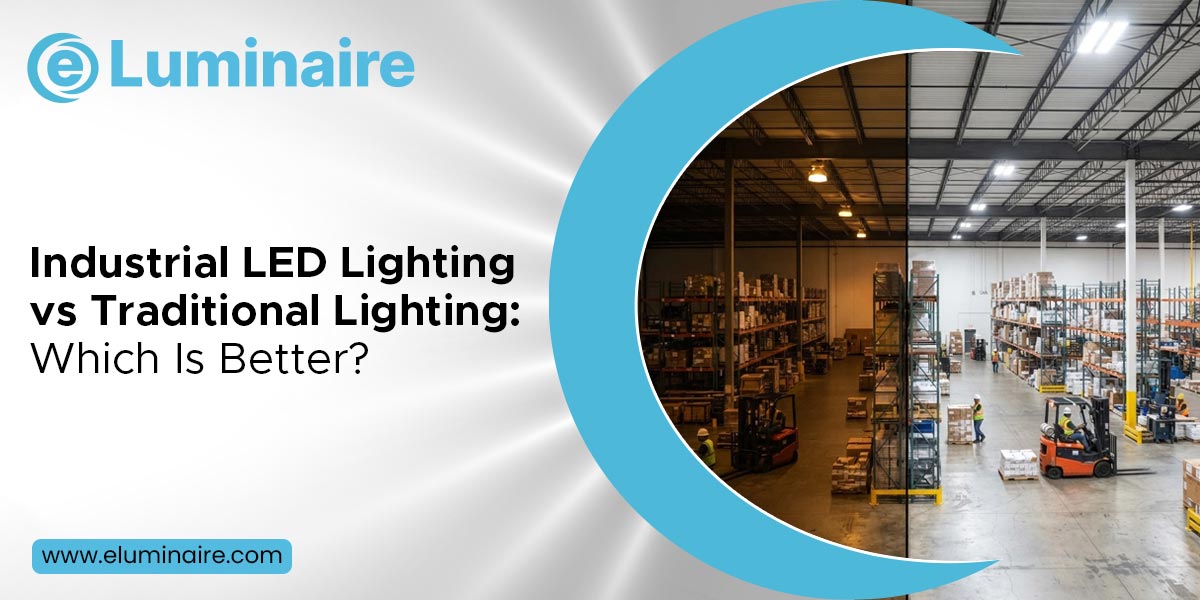
Maybe you have walked through a plant and noticed one corner always feels darker than the rest. A few lights may flicker, one aisle may look dull, and maintenance keeps returning to the same fixtures. When businesses compare Industrial LED Lighting in Connecticut with older systems, the question is not only about brightness. It is how lighting affects daily work, cost, upkeep, and confidence over many years.
At eLuminaire, we know lighting decisions often start with a simple concern: “Are we spending more than we should?” Traditional lighting can keep working for years, so replacing it may feel unnecessary. Yet older metal halide, fluorescent, or high-pressure sodium fixtures can bring hidden costs through energy use, lamp changes, warm-up time, and uneven light.
Industrial buildings ask more from lighting than a small office or home. High ceilings, long operating hours, dust, vibration, loading areas, and large floor plans can expose weak lighting quickly. Warehouse LED Lighting in Connecticut can help create clearer, more useful light across aisles and work zones. Better coverage can also make daily tasks feel easier in areas with uneven brightness.
Most people first hear about LED lighting because of energy savings. That matters, but we think the bigger picture deserves attention. A well-planned LED fixture can put useful light where it is needed instead of simply producing more light. For a facility exploring Parking Lot LED Lights in Connecticut, that control can matter across drive lanes, entrances, walkways, and parking spaces.
At eLuminaire, we design lighting around real operating needs, not just wattage on a box. LED fixtures can work well with sensors, dimming, and scheduled controls. This gives us more ways to reduce wasted light during quiet hours. Older systems may support some controls, but many offer less flexibility.
A lighting upgrade can affect more than the monthly power bill. Depending on the space and fixture plan, businesses may notice:
Many people tell us the maintenance problem becomes obvious only after a lift is needed again. Replacing a lamp thirty feet above a warehouse floor is not the same as changing a bulb at home. Industrial LED Lighting in Connecticut can reduce how often crews need to access high fixtures, which can help limit service interruptions and repeated labor.
eLuminaire focuses on fixture quality because long life depends on more than the LED chips alone. Heat control, drivers, optics, housing, and build quality all matter. A poorly made LED fixture can still fail early. We prefer to look at the full fixture, the setting, expected hours, and operating conditions before treating LED life as a simple number.
Traditional lighting also brings familiar maintenance routines. Some facility teams know exactly how to replace lamps and ballasts, and that comfort has value. Yet routine replacement can become expensive when dozens or hundreds of fixtures are involved. Warehouse LED Lighting in Connecticut may offer a better long-term fit when access is difficult and lighting stays on for extended hours.
A warehouse can be fully lit and still feel uncomfortable. Harsh glare, dark shelf faces, strong shadows, or poor contrast can make a space tiring to work in. At eLuminaire, we look at how light reaches the task area, not just the total output. Good lighting should support clear sight without making the room feel harsh.
Parking areas have similar concerns. Too much light in one spot can make the next area seem darker. Too little light can leave entrances or walking paths hard to read at night. Parking Lot LED Lights in Connecticut can be selected with optics that guide light more carefully across the site, helping us plan useful coverage instead of simply adding higher wattage.
This is where many decisions become difficult. A traditional replacement lamp or fixture can cost less at the start, which may help when a budget is fixed. But the purchase price does not show electricity, service calls, lift rental, replacement parts, or downtime. At eLuminaire, we encourage buyers to compare full operating cost instead of one invoice.
For a facility considering Industrial LED Lighting in Connecticut, we suggest reviewing operating hours first. A fixture running twelve or sixteen hours each day creates a very different cost picture from one used occasionally. The longer the operating hours, the more energy and maintenance can influence the final decision.
The same thinking applies inside distribution centers. Warehouse LED Lighting in Connecticut should be planned around aisle height, rack layout, ceiling height, task type, and occupancy patterns. A fixture that works well in an open production floor may not suit tall racks. We would rather match the lighting to the work than force one fixture into every space.
Outdoor fixtures face rain, dust, temperature changes, wind, and long nightly operating hours. That means housing, seals, optics, and electrical parts deserve careful attention. eLuminaire designs and manufactures LED fixtures with these real conditions in mind. Our goal is simple: provide dependable light while keeping performance practical for the site.
For Parking Lot LED Lights in Connecticut, winter conditions can also shape the decision. LED lighting reaches useful output quickly in cold weather, which helps outdoor areas using timers, sensors, or changing schedules. A good layout should also consider mounting height, pole spacing, nearby buildings, and where drivers or pedestrians need clear visibility.
For most industrial and commercial projects, we see LED lighting as the stronger long-term choice. It can reduce energy use, lower maintenance needs, support smarter controls, and provide more precise light placement. Traditional lighting may still make sense when the existing system sees light use, the budget is very limited, or the site will soon change.
At eLuminaire, we do not think the decision should come from a trend or a simple “LED is better” statement. We look at the building, operating hours, maintenance access, light levels, controls, and long-term plans. That gives us a clearer basis for choosing the right fixture and avoiding an upgrade that looks good on paper but feels wrong in daily use.
Maybe your current lights still turn on every morning. That does not always mean the system is still working well for your people, your costs, or your building. We have seen small lighting problems become accepted as normal simply because everyone gets used to working around the same issue.
eLuminaire helps businesses compare lighting needs with practical fixture choices for industrial, warehouse, parking, garage, canopy, and other commercial spaces. We believe good lighting should feel almost unnoticed. You should be able to see clearly, work comfortably, maintain the space with less trouble, and know the system fits what the site truly needs.