
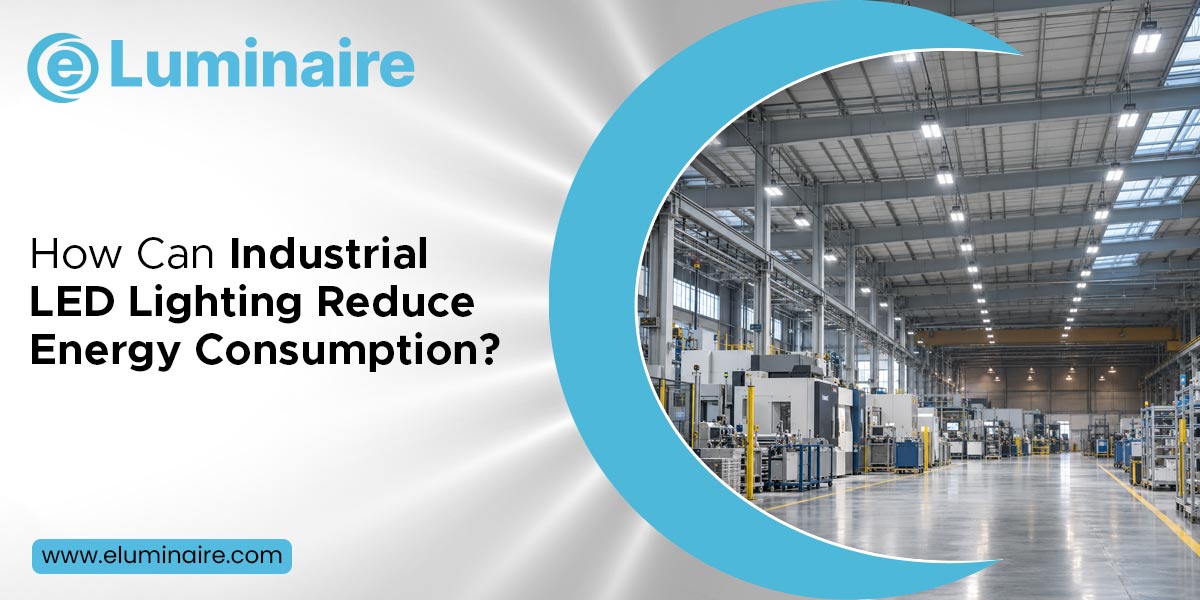
A lighting bill can become easy to ignore when a facility runs every day. Month after month, the cost starts to feel fixed, even when older fixtures waste power. Many facility managers tell us, “The lights still work, so why make a change?” We understand that feeling. At eLuminaire, we see lighting as a working part of your building. For facilities considering Industrial LED Lighting in Minneapolis, MN, the goal is simple: use less power while keeping the light your team needs.
Lighting rarely gives a clear warning when energy use is too high. Older fixtures can keep glowing while drawing more power than needed. That makes waste easy to miss. When we design Commercial LED Lighting in Minneapolis, MN, we focus on useful light first. A good plan should give each work area enough light without asking the electrical system for more than necessary.
We’ve seen this happen often in warehouses, plants, loading areas, and large workspaces. Lights stay on through long shifts while parts of a building sit empty. At eLuminaire, we look at wattage, output, operating hours, ceiling height, and work needs together.
A well-made LED fixture can produce useful light with less electrical input than many older systems. Lighting efficiency is often measured in lumens per watt. When we provide Commercial Lighting Fixtures in Minneapolis, MN, we look at light output and power demand together. Brightness alone never tells the whole story.
Good optics matter too. Light above racks or against unused walls still consumes power. At eLuminaire, we design fixtures to place useful light where work happens. Wasted light often becomes wasted energy.
One fixture may run for thousands of hours each year. Now picture hundreds of fixtures doing the same work. A small drop in wattage can become meaningful across a full lighting system. Energy Efficient Commercial Lighting in Minneapolis, MN can be especially useful in buildings with long shifts or evening work. We encourage you to consider the total connected load, not just one fixture.
Start with fixture wattage, fixture count, and daily operating hours. Compare the present system with the proposed LED design. You can then see where power use changes.
Before replacing anything, we suggest reviewing the space as a working environment. A lower-watt fixture only helps when light still reaches the right area. For Industrial LED Lighting in Minneapolis, MN, we want the design to match real tasks, aisle layouts, mounting heights, and work schedules. That keeps energy savings tied to the way your facility works.
A practical review may include:
Maybe you’ve walked through a stockroom late in the day and seen every light burning. No one was working inside, yet the full lighting load stayed active. Occupancy sensors, dimming, scheduling, and daylight controls can reduce output when full light is not needed. Commercial LED Lighting in Minneapolis, MN can respond to real use instead of staying fixed all day.
Energy savings should not depend on someone remembering every switch. Sensors can help in warehouses, back rooms, parking areas, and mixed-use spaces. At eLuminaire, we discuss controls whenever controls suit the space.
Sometimes the problem is not only the fixture type. Poor spacing can create dark areas, which often leads to more fixtures being added. Commercial Lighting Fixtures in Minneapolis, MN should be chosen with beam spread, mounting height, aisle direction, and task location in mind. A thoughtful layout can often do more with light before adding more electrical load.
Good distribution also affects comfort. Harsh bright spots beside dim zones can make work tiring. At eLuminaire, we design and manufacture high-quality LED fixtures with precision in mind.
Older lighting can release noticeable heat into a building, giving cooling equipment more work. LEDs still create heat, so good thermal design matters. Lower wattage can also mean less heat added to the room.
Heat matters inside the fixture as well. Poor thermal control can affect LED life and light output over time. We treat thermal management as part of the design work, not an afterthought.
Replacing lamps in high ceilings can mean lifts, blocked aisles, staff time, and planned shutdowns. Many people do not connect those tasks with a lighting choice made years earlier. Industrial LED Lighting in Minneapolis, MN can help reduce how often lighting work interrupts normal operations when the fixture is properly matched to the space.
Think about maintenance access before choosing a product. A fixture may look right on paper but become frustrating above machinery or storage racks. Good lighting should make daily work easier.
A loading dock, production line, office, and storage aisle can sit under one roof yet need very different light. Commercial LED Lighting in Minneapolis, MN should start with the work happening in each area. We ask you to think about visibility, movement, comfort, and hours of use before choosing fixture output.
That approach can prevent overlighting. More light is not always better. We prefer the right amount of light in the right place.
When you are planning an upgrade, a few details can tell us a lot. We look at long-running areas, glare, dark spots, hard-to-reach fixtures, empty zones, daylight, future layout changes, and control needs. Those details help shape the fixture plan before quantities are discussed.
This review helps us avoid a one-size-fits-all plan. When we discuss Commercial Lighting Fixtures in Minneapolis, MN, we want the fixture choice to support the space, not force the space to work around the fixture. A strong lighting plan should feel natural once installed.
A low energy number means little if staff members struggle to see labels, tools, surfaces, or walkways. We never want efficiency to come at the cost of useful light. Energy Efficient Commercial Lighting in Minneapolis, MN should support lower power use and a comfortable visual environment. That balance comes from fixture choice, optics, controls, and layout working together.
At eLuminaire, we design and manufacture LED fixtures with quality and precision at the center of our work. An energy upgrade can feel like a large decision when the current system still works. Yet old lighting can quietly add cost for years.
If your energy bills keep rising, lighting deserves a closer look. You need a plan showing where power is used, where light is wasted, and what your building truly needs.
For businesses considering Energy Efficient Commercial Lighting in Minneapolis, MN, we suggest starting with the space, not the sales pitch. Look at operating hours, fixture count, wattage, controls, maintenance, and real light needs. Then build the new system around those facts. At eLuminaire, that is how we approach lighting that supports your work while reducing avoidable energy use.