
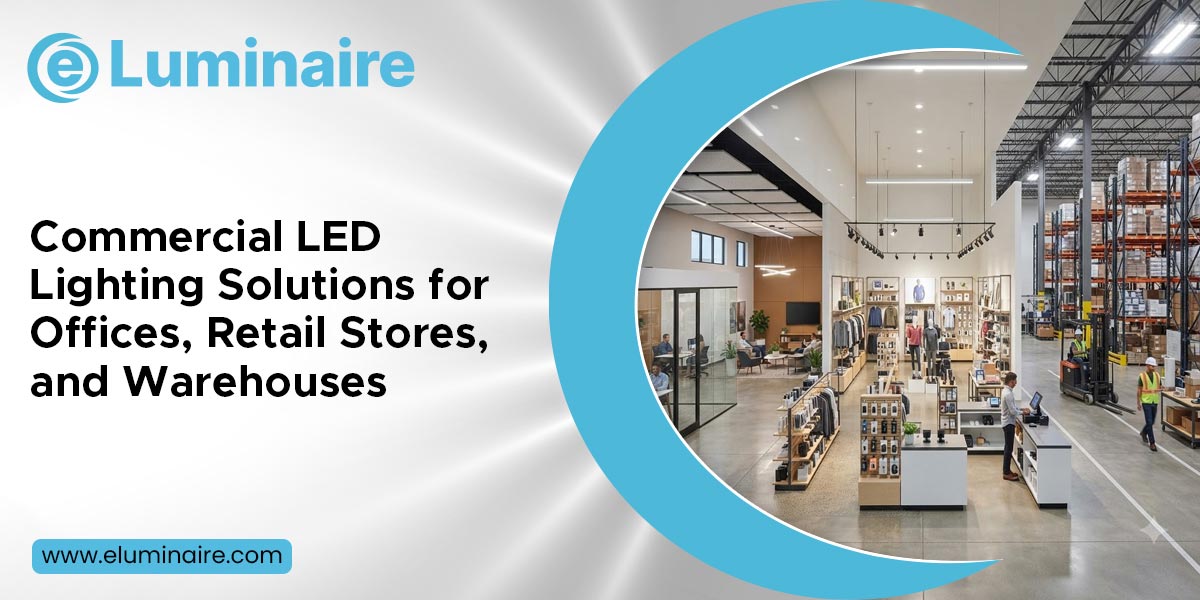
Lighting problems rarely begin with one big complaint. A desk feels too bright, a store corner looks dull, or a warehouse aisle becomes harder to read after a long shift. At first, it seems small. Then glare, uneven light, high power use, and repeated maintenance begin affecting daily work. At eLuminaire, we see why choosing Commercial Lighting Fixtures in Chicago deserves more thought than simply replacing old lamps with LEDs.
Many people tell us a space can look bright and still feel uncomfortable. We have seen this happen often. Screen glare, weak color, and sharp shadows can make a room feel tiring. Good lighting should support the task without calling attention to itself.
When we plan Commercial Lighting Systems in Chicago, we start with the space. Ceiling height, working hours, daylight, surface colors, aisle layout, and maintenance access all matter. Bringing these details together helps the room feel clear, steady, and easier to use.
At eLuminaire, we design and manufacture high-quality LED lighting fixtures with care for optics, heat control, materials, and daily use. We do not believe every office, store, or warehouse needs the same fixture. The right choice starts with understanding what happens in the space each day.
An office can become tiring when overhead light feels harsh all day. Maybe glare appears on a laptop, or a meeting room always feels dim. Small lighting problems can affect comfort before anyone reports an issue.
As a Commercial LED Lighting Supplier in Chicago, we encourage you to look beyond wattage. Light level, beam spread, glare control, color quality, and controls shape how an office feels. A balanced layout can support desks, meetings, shared areas, and quiet rooms without making every zone look the same.
eLuminaire also considers what happens after installation. Service access, driver quality, heat control, and long-term performance matter when fixtures run for many hours each week.
When businesses compare Commercial LED Lighting Distributor in Chicago options, product access is only part of the decision. Clear technical support, fixture data, project fit, and consistent quality can save time during planning and installation, especially when several room types share one project.
Retail lighting carries different pressure. A well-made product can still look flat under poor light. Colors may feel weak, shelves can blend together, and a featured display may lose attention. Maybe you have felt this in a store that looked bright but not inviting.
With Commercial Lighting Fixtures in Chicago, we focus on how customers move through a space and where visual attention should go. General light should make walking comfortable, while accent light can give displays more presence. Every area needs enough light to do its job without looking overlit.
At eLuminaire, we pay attention to fixture consistency across a project. Mixed color appearance or uneven beam patterns can make a store feel unfinished. Consistent light creates calm, while selected highlights can give key merchandise more presence.
As a Commercial LED Lighting Supplier in Chicago, we can help match fixture types to ceiling conditions, light goals, control needs, and maintenance plans. That gives you a clearer picture of the final layout before installation begins.
Warehouse lighting can look simple from the floor. Bright fixtures go above the aisles, and the job seems done. Tall racks, loading areas, moving equipment, and long operating hours make the real planning more demanding.
When we develop Commercial Lighting Systems in Chicago for industrial spaces, we think about usable light at working level. High bays may need strong output, but beam control matters too. Light needs to reach aisles, pick areas, packing zones, and open floors without harsh glare.
At eLuminaire, our high-bay options are built with industrial use in mind. We consider heat, mounting height, optical control, driver performance, and sensor options because warehouse lighting often runs under tougher conditions.
As a Commercial LED Lighting Distributor in Chicago, we know timing matters. A warehouse cannot always stop work for a long lighting change. Clear product selection, dependable supply, and a planned installation sequence can help reduce disruption during upgrades or new construction.
Most people do not think about controls until a room stays fully lit while empty. Occupancy sensing, dimming, and daylight response can help. We choose controls based on how each area is used, not because more technology sounds better.
With Commercial Lighting Systems in Chicago, control planning can reduce wasted light and give zones more freedom. Offices may benefit from daylight response. Warehouses may use occupancy sensing in low-traffic aisles. Retail spaces may need scene settings for displays, cleaning, or after-hours work.
eLuminaire treats controls as part of the lighting plan, not an afterthought. A fixture and control should work together in a way that feels simple for staff. Confusing controls often end up ignored.
A low purchase price can feel attractive when a budget is tight. The harder questions come later. Will light output stay consistent? Will drivers handle long hours? Can replacement parts be sourced? These questions matter after the installation crew leaves.
As a Commercial LED Lighting Supplier in Chicago, we believe these questions deserve attention before an order is placed. LED quality depends on more than the diode. Heat management, optics, drivers, housing design, and assembly quality all shape long-term performance.
At eLuminaire, our work is shaped by engineering discipline and manufacturing control. We use strong component partners and focus on precision because commercial lighting is expected to work every day across busy spaces.
When choosing a Commercial LED Lighting Distributor in Chicago, ask for clear product information instead of relying on a short sales promise. Photometric data, input voltage, controls, warranty terms, mounting details, and application guidance can make project decisions much easier.
Commercial spaces change. Teams grow, shelves move, racks shift, and rooms take on new uses. A lighting plan should leave room for change without forcing a full redesign.
With Commercial Lighting Fixtures in Chicago, we encourage a zone-by-zone approach. A quiet office, sales floor, loading bay, and high-rack aisle may sit under one roof, but each area asks for different light. One fixture rarely answers every need well.
eLuminaire can support that process from fixture selection through project discussion. We bring design and manufacturing knowledge into the conversation so you can weigh light quality, installation needs, controls, and long-term use together.
If your current lighting feels uneven, harsh, costly to maintain, or wrong for the work, that feeling deserves attention. It usually starts with something small. Once we look closely, we can often see where the light and the space stopped working together.
We want commercial lighting decisions to feel clear and grounded in the real space in front of us. Whether you are planning an office, retail store, or warehouse, we can help you choose lighting that supports visibility, comfort, product presentation, and daily work without making the project harder than it needs to be.