
Maybe your facility looks bright, yet some areas still feel dim or uncomfortable. Staff may avoid dark corners, drivers may struggle outside, and energy bills keep rising. We’ve seen this happen often. Choosing Commercial Lighting Systems in Boston, MA should start with how your space feels and works each day. A good plan supports comfort, safety, and clear sight without wasting power. At eLuminaire, we help you look past brightness alone and choose light that fits your real needs.
It usually starts with something small. A light takes too long to warm up. Another fixture flickers above a work area. Soon, dark spots appear, service calls increase, and your team starts working around the problem. At first, it doesn’t seem important. Yet these small issues can affect focus, safety, and daily work. We suggest walking through your facility at different times. Notice where people slow down, strain their eyes, or mention poor visibility.
Before comparing Commercial Lighting Fixtures in Boston, MA, we need a clear picture of your current setup. Count the fixtures, note the lamp types, and record how long each area stays lit. Your utility bills can show how much power the site uses each month. Maintenance records can reveal which lights fail most often. These details help us find the cause of the problem instead of replacing every fixture without a sound plan.
A warehouse aisle does not need the same light as a parking lot. Offices need soft, even light that helps reduce eye strain. Loading zones need clear light that supports safe movement. Production floors may need stronger light for close tasks and machine work. At eLuminaire, we begin with the work taking place beneath each fixture. This keeps the plan tied to your people, equipment, and daily tasks.
Outdoor spaces bring a different set of concerns. Rain, snow, ice, heat, dust, and road salt can wear down weak products. Commercial Outdoor LED Lighting in Boston, MA must handle cold winters and wet days without losing steady output. We recommend fixtures with the right wet-location rating, sealed housings, sound heat control, and tough mounting parts. The fixture must also direct light where people need it, without spilling harsh light into nearby properties.
Before choosing any product, we suggest asking simple questions about each part of your site:
These answers give us a more useful starting point than fixture price alone.
Many people tell us that lighting labels feel hard to compare. Watts show how much power a fixture uses, not how much useful light reaches your space. Lumens show total light output, while foot-candles show how much light reaches a surface. Color temperature affects whether the space feels warm or crisp. The color rendering index shows how natural colors appear. eLuminaire helps you review these measures in plain language, so each choice has a clear reason.
When reviewing Commercial Lighting Systems in Boston, MA, we also look at beam spread and fixture spacing. One bright fixture cannot fix a poor layout. Wide spacing may leave dark gaps, while tight spacing may waste power and create glare. A photometric plan can show expected light levels before installation begins. This helps us adjust fixture output, mounting height, and placement while changes remain easier and less costly.
Glare deserves more care than it often receives. A space can meet a light target and still feel tiring. Bare LEDs, sharp contrast, or badly aimed fixtures may cause headaches and visual stress. In parking areas, glare can make it harder to see people near moving cars. eLuminaire designs and selects optical systems that place light with care. We aim for useful coverage, balanced contrast, and a comfortable view from common sight lines.
The best product on paper may fail when placed in the wrong setting. Dusty plants need sealed fixtures. Food areas may require smooth housings that are easy to clean. Garages need products suited for moisture and vehicle fumes. High ceilings need strong output and sound heat control. When we compare Commercial Lighting Fixtures in Boston, MA, we match each fixture with the room, mounting height, temperature, and expected operating hours.
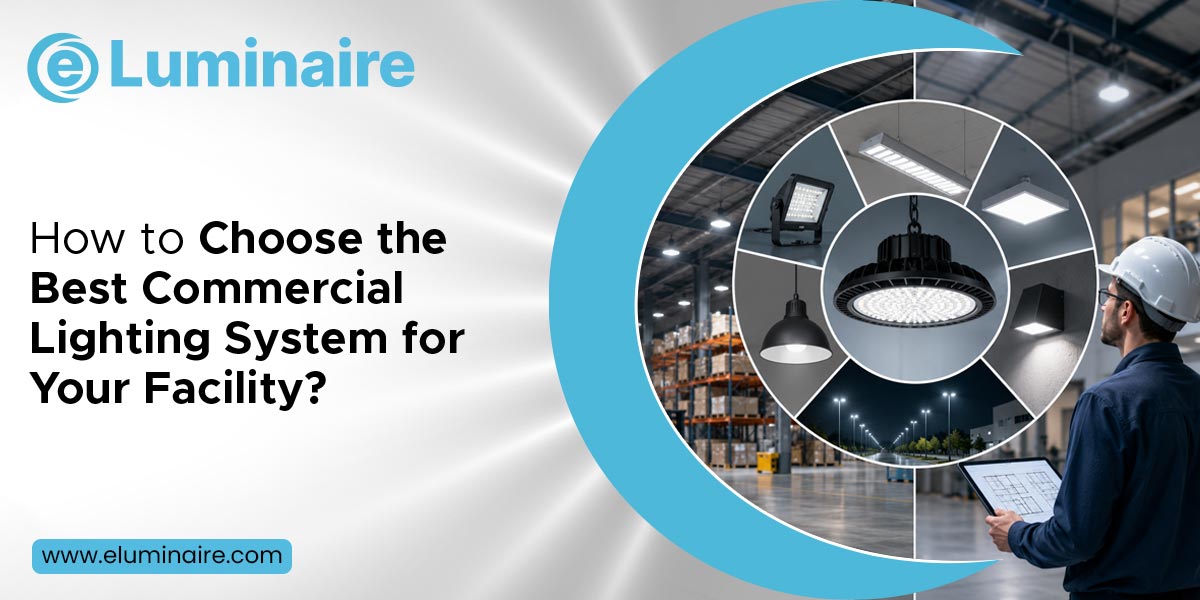
Product type also matters. High-bay lights work well in warehouses and large work areas. Canopy lights support covered entrances and fueling sites. Wall packs can light building edges and walkways. Area lights can cover parking lots, roads, and large yards. Garage fixtures can improve visibility across parking decks. eLuminaire offers these product groups because one fixture style cannot serve every part of a facility well.
For Commercial Outdoor LED Lighting in Boston, MA, the housing and driver deserve close review. Strong light output means little when water enters the fixture or heat harms the driver. Ask about the fixture rating, operating temperature, surge protection, and expected service life. Pole condition also matters. Old poles, weak arms, or poor wiring can create added risk, even when the new light is well made.
Lighting controls can reduce waste, but controls must suit the way your site works. Occupancy sensors are useful in storage rooms, restrooms, and low-use aisles. Daylight sensors can lower indoor light near windows. Timers and schedules can manage signs, parking areas, and building exteriors. We favor simple controls that staff can understand. A complex system that no one trusts often gets bypassed, leaving the planned savings out of reach.
Good Commercial Lighting Systems in Boston, MA should allow room for future needs. Your floor plan may change, operating hours may grow, or new safety rules may affect light levels. Controls, dimming, and flexible mounting can help your lighting adapt. We recommend discussing planned changes before products are ordered. A small choice made now may save a major replacement later.
The lowest quote may feel safe when budgets are tight. Yet a low price can hide weak drivers, short coverage periods, poor light control, or hard-to-find parts. We compare energy use, expected life, labor needs, warranty terms, and replacement access. At eLuminaire, we want the full cost to remain clear. Saving money during purchase means little if service calls and early failures erase that saving.
When comparing Commercial Lighting Fixtures in Boston, MA, ask every supplier to quote the same scope. Each quote should state fixture count, wattage, output, controls, mounting parts, freight, and warranty terms. Installation work should also be clear. Without a shared scope, one offer may look cheaper because key items are missing. We’ve seen this happen often, and the gap usually appears after work has started.
Before approving a proposal, we recommend checking:
Parking lots, loading areas, and walkways shape the first and last part of each visit. Dark gaps may leave people uneasy. Harsh light can also reduce clear sight by creating deep shadows. Commercial Outdoor LED Lighting in Boston, MA should make faces, curbs, signs, steps, and moving vehicles easier to see. We aim for even coverage instead of placing a few very bright lights around the site.
Snow can reflect light, while wet pavement can increase glare. Tree growth, signs, trucks, and building edges can also block coverage. A plan based only on a flat drawing may miss these details. We suggest reviewing the site after dark and checking common views from cars and walkways. This simple step often reveals problems that are hard to notice during daylight.
Choosing Commercial Lighting Systems in Boston, MA does not need to feel like a technical test. Start with the spaces causing real concern, then build the plan around the people using them. Check light quality, fixture strength, controls, cost, and future needs as one connected choice. eLuminaire can help you review each part without rushing the decision or pushing more light than your site needs.
The right system should feel almost unnoticed after installation. Work areas become easier to use, outdoor paths feel safer, and maintenance calls become less common. Commercial Outdoor LED Lighting in Boston, MA should keep working through changing weather and long operating hours. When each fixture has a clear purpose, your facility gains better light without added waste. That is the result we want you to live with for years.